WHEN A CO-OPERATIVE WANTS TO DIVIDE...
WHAT EVERY MEMBER SHOULD KNOW
Division is not simply “we want our own society.” It is a legal journey that must protect every member, every creditor and the assets built together.
A co-operative society is more than a building, a factory, a farm, a bank account or a collection of members. It is an organization created by members who come together to pursue a common economic and social purpose.
But what happens when members reach a point where they believe the society should be divided into two or more societies?
Can a group simply walk away with part of the society's assets?
Division does not begin with a committee, a few members, a WhatsApp group or a public announcement.
It begins with the members of the existing society passing a preliminary resolution through a Special General Meeting.
The members must formally resolve that:
“We want to divide this society into two or more co-operative societies.”
This is a serious decision because the members are proposing to change the very structure and existence of their society.
The preliminary resolution is not merely a statement saying:
“We have decided to divide.”
It must contain proposals showing how the division will actually happen.
Among other things, it should provide for:
🏠 Assets
Which assets will go to which new society?
For example:
- Factory buildings
- Land
- Vehicles
- Machinery
- Equipment
- Bank balances
- Investments
- Shares
- Other property
💰 Liabilities
What happens to the debts?
If the existing society owes money, the debt cannot simply disappear because the members want to divide.
The proposal must show how the liabilities will be allocated among the new societies.
👥 Membership
The resolution may also specify which members will constitute each new society For example:
New Society A
- Members from Area A
New Society B
- Members from Area B
The proposed areas of operation may also be specified.
This is a very important part of the process.
Once the preliminary resolution has been passed, a copy must be sent to:
✅ All members
✅ Creditors
✅ Other persons whose interests may be affected by the division
Why?
Because division affects more than the members sitting in the meeting.
A society may owe money to a bank.
It may owe suppliers.
It may have contractual obligations.
It may have employees.
It may have other people with legitimate interests in its affairs.
Those interests cannot simply be ignored.
The law gives affected persons an opportunity to raise their concerns.
Members
A member may give written notice that they do not wish to become a member of any of the new societies.
Creditors
A creditor may notify the society that they want payment of money owed to them.
Other affected persons
A person whose interests are affected may formally object to the proposed division.
This is an important principle of fairness:
Before a society is divided, those whose legitimate interests may be affected must be given an opportunity to be heard.
After three months from the date of the preliminary resolution, another Special General Meeting is held.
This is where the process becomes even more important.
The meeting considers:
- The preliminary resolution;
- Notices from members;
- Claims from creditors;
- Objections from other affected persons; and
- The proposed arrangements for dealing with those claims.
The society must then make further provisions through a resolution.
Where a member has given notice that they do not wish to become a member of any of the new societies, provision must be made for repayment of their share capital.
Creditors are also protected.
If a creditor has given notice demanding payment, the second resolution must make provision for satisfying the creditor's claim. The debt remains a responsibility that must be properly provided for in the division arrangement.
Creditors are also protected.
If a creditor has given notice demanding payment, the second resolution must make provision for satisfying the creditor's claim.

Now comes another important democratic safeguard.
The preliminary resolution must be confirmed by a further resolution passed by at least two-thirds of the members present and voting.
The preliminary resolution may be confirmed with changes, provided the changes are not substantial.
Where there is a question as to whether proposed changes are substantial, the law gives the Commissioner the mandate to determine the issue.
This is important because the process may reveal issues that were not properly anticipated when the first resolution was passed.
Passing resolutions at members' meetings does not automatically create the new societies.
The matter proceeds to the Commissioner for Co-operative Development.
The Commissioner must be satisfied that:
- The legal requirements have been complied with;
- The required resolutions have been properly passed;
- The claims and interests of affected persons have been addressed; and
- The proposed division is in accordance with the law.
If satisfied, the Commissioner may register the new societies and their by-laws.
Upon registration:
The existing society's registration comes to an end. The new societies become registered co-operative societies.
Assets and liabilities are vested in the new societies
according to the approved division arrangement.
The remaining members become members of the respective new societies as provided in the approved resolution.
Unresolved legitimate claims may be pursued against
the relevant new society as provided in the approved arrangement.

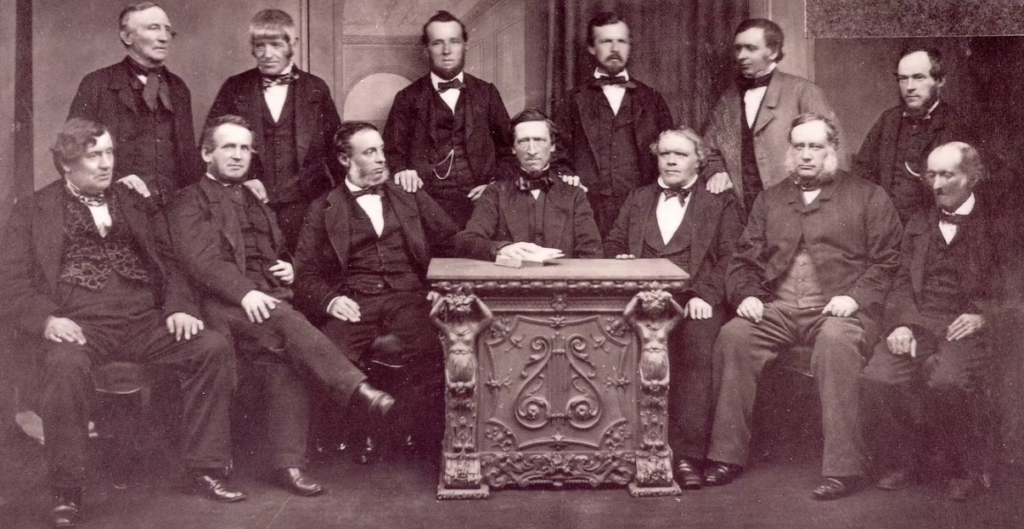
The founders of the co-operative movement did not succeed because they were the strongest.
They succeeded because they were the most united.
They used the language of teamwork:
“Let us try this.”“Let us discuss that.”
Their secret was simple:
You can go fast alone, but you can only go far together.
The world`s co-operative movement is powerful.
We have:
Experience
A rich legacy...
Let’s shift the mindset,
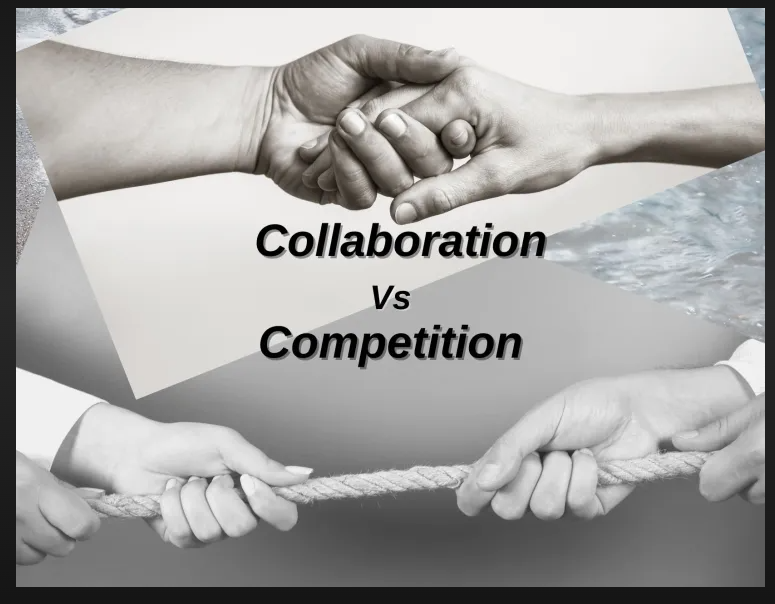
Stop competing for titles ... Start competing for ideas.Stop fighting for positions ... Start fighting for progress.
Let leaders see members as equals, Let members see leaders as partners.
It is time to return to the spirit that built this movement:
Co-operation, not competition.
When we compete against each other, we lose together.
When we co-operate with each other, we rise together.
And honestly, if the founders built a global movement with flour and candles,
Let us imagine what we can build today with all the knowledge, resources, and technology around us.

Hey, i am wairimu mwangi,
Hi, I am Milfred Wairimu Mwangi a researcher, trainer, strategist, and a passionate believer in the power of people coming together.
I currently work with Co-operatives in Kenya, where my work revolves around strengthening co-operatives, building leadership capacity, nurturing governance structures, and helping communities grow through the cooperative model, a journey that has deepened my love for organizational development, member empowerment, and sustainable co-operative growth.
I believe the co-operative movement is one of the most powerful tools we have for transforming lives in the world. When people unite, share ideas, and work with integrity, they create possibilities far greater than anything they could achieve alone.
This blog is where I share insights, stories, and lessons from the field.
Welcome to my world of co-operation, growth, and community development.
Let’s learn together. Let’s grow together.